
TL;DR
A useful branding questionnaire covers five areas: brand foundations, audience and competitors, personality and tone, visual preferences, and project logistics. The goal isn’t more questions, it’s questions that make clients actually think before they answer. Get this right at the start of a project and you’ll spend a lot less time chasing follow-up emails later.
A branding questionnaire is supposed to make your job easier, but a lot of designers send one out and get back answers too vague to build anything from. You ask about visual style and hear “something modern but timeless.” You ask about target audience and hear “everyone, honestly.” None of that is on the client. It usually means the questionnaire itself wasn’t built to pull out a real answer.
You already know a solid branding questionnaire is meant to save you back-and-forth emails and give you a clear starting point before you open a single design file. That only happens when the questions are written with intention, not copied from a template you made years ago and never revisited. Here’s what belongs in yours.
Why a Branding Questionnaire Sets Up the Whole Project
Before getting into what to include, it helps to remember what a branding questionnaire is actually for. It’s the foundation everything else in the project gets built on. The audience details, the brand voice, the visual direction, all of it traces back to what a client tells you here.
When a branding questionnaire is thin or generic, you usually feel it later, mid-project, when you realize you don’t actually know who the brand is trying to reach or what it’s supposed to say to them. A stronger discovery process up front means fewer of those moments down the line.
What to Include in a Branding Questionnaire
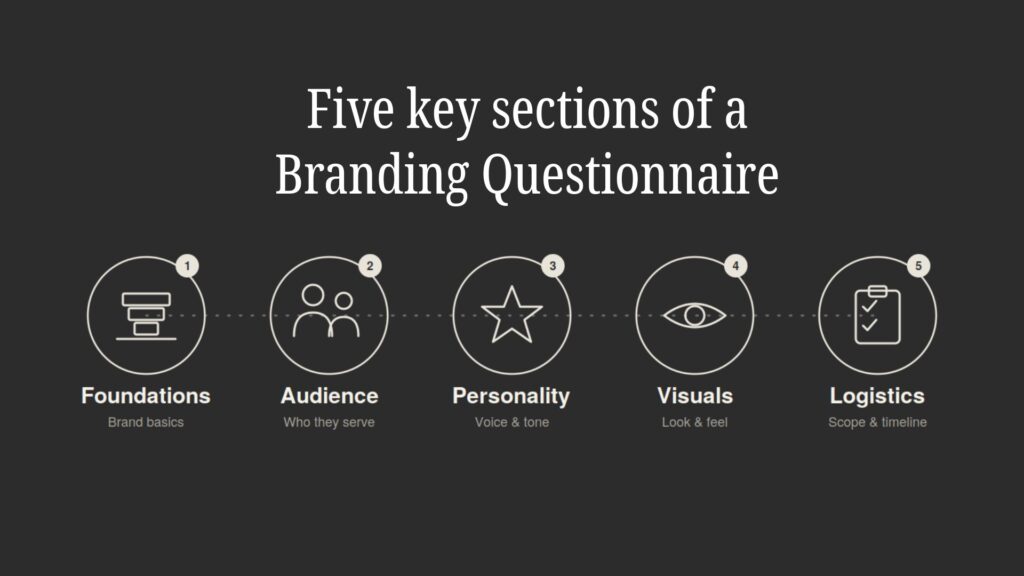
A thorough branding questionnaire covers five areas. You don’t need dozens of questions to hit all of them, you need each section to earn its place.
Brand foundations and goals. This is where you get the basics everything else depends on: what the business does, why it exists, and what problem it actually solves for its customers. Ask where the client wants the business in a year or two as well. A branding questionnaire that skips this leaves you designing without knowing what the brand is trying to accomplish.
Audience and competitors. Skip the broad “who’s your target market” question and get specific. Ask about age range, income level, daily habits, and what keeps that person up at night. Then ask who they see as competition and what those brands do well or poorly. This is where a branding questionnaire starts to reveal the gap a client’s brand actually needs to fill.
Personality and tone. This is where you uncover the feel of the brand, and instead of asking clients to pick adjectives out of thin air, give them something to react to. Ask them to describe the brand as if it walked into a room full of strangers, or to name three brands in any industry whose personality they admire and explain why. A branding questionnaire that gets specific here gives you real material to work from instead of a list of buzzwords.
Visual preferences and existing assets. Ask what they like and dislike about their current visuals, if they have any, and which other brands catch their eye. Have them flag anything they’re firmly against too, whether that’s a color they can’t stand or a font they’re stubbornly attached to. This part of a branding questionnaire also gives you the chance to ask about existing brand files, so nothing gets lost between the old brand and the new one.
Project logistics. Timeline, budget expectations, who the final decision-maker is, and how many people need to weigh in before anything gets approved. This section rarely gets much attention, but a branding questionnaire that leaves it out is how you end up three weeks into a project discovering there are four stakeholders instead of one.
If you’d rather not build this structure from scratch, my Branding Questionnaire Template already has these five sections built in, with prompts written to help clients think clearly instead of guessing. It’s $17 and comes in Google Forms, Notion, and fillable PDF, so it slots into whatever system you already use to onboard clients.
How to Phrase Branding Questionnaire Questions People Actually Answer Well
The biggest issue with most branding questionnaires isn’t a missing section, it’s phrasing that invites a one-word answer instead of a real one. Ask “what’s your brand personality?” and you’ll get “professional but friendly” almost every time. Ask a client to describe their brand as if it walked into a networking event, or to name a brand outside their industry they admire and explain what specifically draws them to it, and you’ll get something you can actually design from.
Pairing practical questions with more creative ones is what turns a branding questionnaire into a real discovery tool instead of a form. The practical questions get you the facts. The creative ones get you the feeling behind them. A brand strategy needs both.
Dribbble’s guide to the key questions to ask clients before starting a design project makes a similar point, framing discovery around asking “why” repeatedly instead of taking a client’s first answer at face value.
Streamlined Creative’s breakdown of the brand discovery process also draws a useful distinction between brand discovery, which is understanding a business, and brand strategy, which is developing it. Worth keeping in mind so your branding questionnaire doesn’t try to do a strategist’s job for you.
Common Mistakes That Weaken a Branding Questionnaire
Length is the most common issue. If a branding questionnaire takes an hour to complete, clients rush the second half just to finish it, and you lose the depth you were trying to get in the first place. Something that takes fifteen to twenty minutes of real thought works better than something that feels like an exam.
Closed yes or no questions are another common trap. “Do you like bold colors?” tells you almost nothing. “How do you want people to feel when they see your brand?” gives you something to actually build from.
Skipping the logistics section because it feels less interesting than the personality questions is a mistake too. A branding questionnaire that nails the creative side but misses the approval process and timeline still sets you up for friction later in the project.
Where a Branding Questionnaire Fits Into Your Client Process
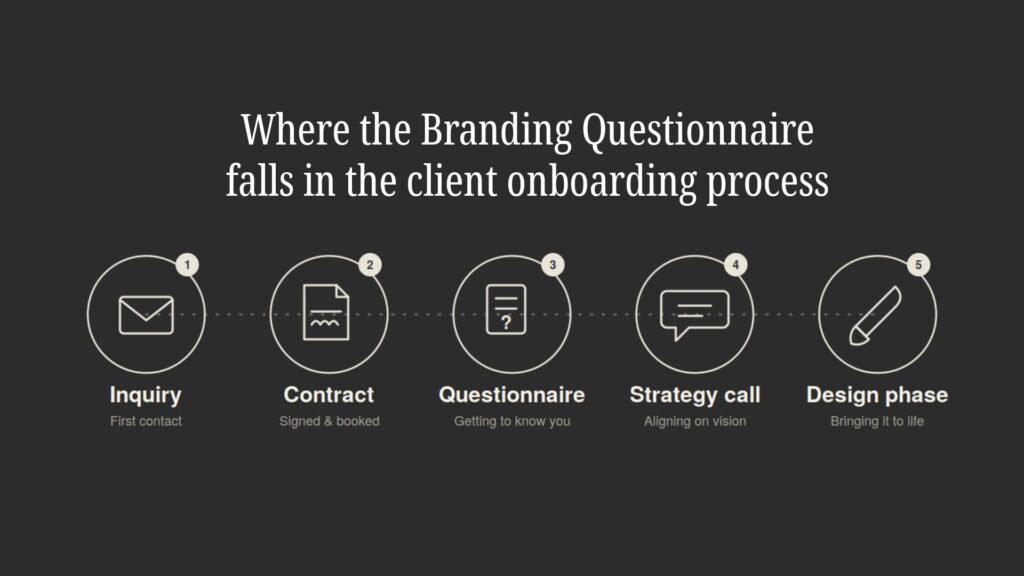
Most designers send a branding questionnaire right after a signed contract and deposit, before any strategy call happens. That gives clients time to sit with their answers instead of improvising them live on a call. If you’re working on how to streamline your client onboarding, this is one of the steps worth automating so it goes out the moment a project is booked.
Once you have strong answers in hand, they become the backbone of everything that follows, including the brand guide you eventually hand off to the client at the end of the project. The clearer the discovery, the easier that final document is to put together.
Mentioning your discovery step in your services and pricing guide also signals to prospective clients that you run a considered process from the first inquiry.
Ready to stop rebuilding this document every time a new client signs on? The Branding Questionnaire Template is $17, built with prompts that get you real answers from day one, and available in Google Forms, Notion, or fillable PDF depending on how you already work.
Next Steps: Start This Week
- Pull up your current branding questionnaire, or start a blank doc if you don’t have one, and check it against the five core sections above.
- Rewrite any question that could be answered in one word. Turn it into something that asks for a reason, an example, or a comparison.
- Time yourself filling it out as if you were the client. If it takes longer than twenty minutes, trim it.
- Decide where in your process this document goes out, and note it in your onboarding workflow or your services guide.
- If you’d rather skip the rebuild, grab the Branding Questionnaire Template and drop in your own branding for the next client that signs on.
Frequently Asked Questions
How many questions should a branding questionnaire have?
There’s no fixed number, but most effective branding questionnaires land somewhere between 20 and 30 questions across the five core categories. Beyond that, clients tend to rush their answers.
Should I send the branding questionnaire before or after the strategy call?
Before. Sending it ahead gives clients time to think through their answers instead of improvising on the spot, and gives you material to reference during the call.
Can I reuse the same branding questionnaire for every client?
Yes, with light tailoring. The core structure works across most branding projects, but you may want to adjust a few questions depending on industry or whether it’s a full rebrand versus a brand built from scratch.
What if a client gives short or vague answers anyway?
A short follow-up call or a few clarifying emails focused on the vague answers usually resolves it faster than trying to fix things in writing.