
TL;DR
Brand discovery vs brand strategy comes down to this: discovery is the research phase, strategy is the decision phase. Discovery gathers information about the business, the audience, and the market. Strategy takes that information and turns it into positioning, messaging, and direction. You need both, in that order, and skipping either one shows up later as vague client answers, wishy-washy positioning, or a design phase built on preference instead of purpose.
You’ve probably said “brand discovery” and “brand strategy” in the same breath more than once, maybe even in the same sentence of a proposal. Brand discovery vs brand strategy is one of those distinctions that sounds obvious until you try to explain it to a client, and then you realize your own process treats them as one blurry phase instead of two.
That blur causes real problems. Clients don’t understand what they’re paying for at each stage. Your creative decisions start to feel like preference instead of something backed by reasoning. And when a client asks “so what exactly did we land on,” you’re stuck flipping through questionnaire answers looking for something that sounds like a decision.
Once you separate the two, your whole process gets sharper. Let’s go through what each one actually is, where a brand discovery workshop fits into the picture, and how to structure your own version so every phase earns its place.
What Is Brand Discovery?
Brand discovery is the research and information-gathering phase of a branding project. This is where you collect the raw material: business background, audience details, competitor context, and the client’s own read on their brand. You’re not deciding anything yet. You’re listening.
A solid brand discovery process usually includes a few of these:
- A structured branding questionnaire
- A discovery call or a brand discovery workshop
- Competitor research
- A quick audit of existing brand materials
- Stakeholder input, if there’s more than one decision-maker
Most designers start with a questionnaire because it’s the lowest-lift way to get a client thinking before you’re ever in a room together. A well-built one asks about mission, audience, values, personality, and visual preferences in a way that pulls out real answers instead of “modern but timeless” for the tenth time. My Branding Questionnaire Template is built around exactly this, with prompts written to get clients past the buzzwords and into something you can actually use.
The strongest discovery questions tend to stay away from anything visual at first. One widely-cited freelance design guide argues that the more work you put into research and discovery upfront, the easier the rest of the design process becomes, and warns against jumping straight to questions about logos and color preferences before understanding the business itself. That’s the logic behind putting foundational questions first in a branding questionnaire and saving style preferences for later.
The goal of brand discovery is insight, not conclusions. You’re watching for patterns, contradictions, and the language clients keep repeating without noticing. That material becomes the input for everything strategic that comes next.
What Is Brand Strategy?
Brand strategy is the decision-making phase that follows discovery. Once you’ve gathered the information, you step back and turn it into direction: positioning, messaging pillars, personality, and a clear read on how the brand should differentiate itself in the market.
If discovery asks the questions, strategy answers them. This is where you decide, for example, that a founder’s obsession with transparency and a competitive field full of luxury positioning adds up to an opportunity around accessible, honest branding. That’s a strategic call, not a research finding.
If you want the full breakdown of what goes into this phase, I’ve written a separate guide on what brand strategy actually involves, and a companion piece on the seven elements every brand strategy document should include.
Without strategy, design decisions get made on vibes. With it, every color choice and every line of copy has a reason behind it that you can explain to a client without hand-waving.
Brand Discovery vs Brand Strategy: The Key Differences
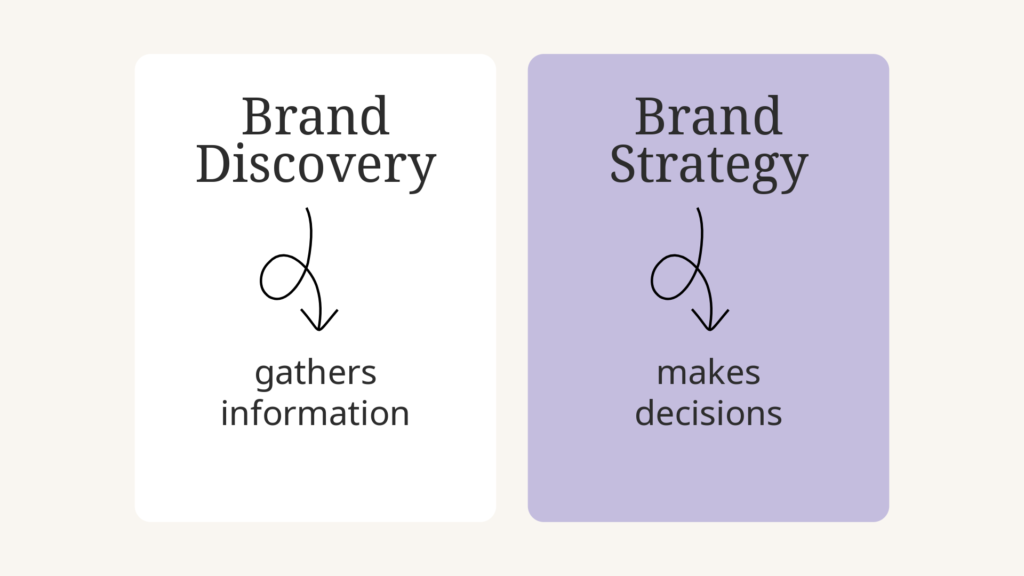
Laid side by side, brand discovery vs brand strategy breaks down into three clear contrasts.
Discovery gathers information. Strategy makes decisions. Discovery might turn up three or four possible angles for a brand. Strategy is where you pick one and commit.
Discovery is about insight. Strategy is about direction. During discovery you notice a theme repeating in a client’s answers. During strategy you decide that theme becomes the center of the brand’s positioning.
Discovery is the input. Strategy is the output. Skip discovery and your strategy is built on assumptions instead of evidence, which tends to show up later as generic positioning nobody at the company actually recognizes.
This mix-up is common enough that other designer educators have written about it directly, pointing out that some designers label a 90-minute call or a slide deck as “brand strategy” when it’s really just discovery relabeled, which affects how the work should be priced. Getting the label right matters for your proposals as much as it does for your process.
What About a Brand Discovery Workshop?
This is where a lot of the brand discovery vs brand strategy confusion actually starts, because a workshop can look like it belongs to either phase.
A brand discovery workshop is a live, guided session where you and the client work through discovery questions together in real time, instead of the client filling out a form on their own. It’s still discovery. You’re still gathering information, not making strategic calls. The difference is format: a workshop gives you the chance to ask a follow-up question the second a client’s answer feels thin, which a static questionnaire can’t do.
A questionnaire and a brand discovery workshop aren’t competing options so much as two ways to run the same phase. A questionnaire is asynchronous, cheaper to run, and works well for smaller projects or clients who think better in writing. A workshop takes more of your time and the client’s, but it surfaces things a form alone tends to miss, especially when there’s more than one stakeholder in the room and their answers don’t quite line up.
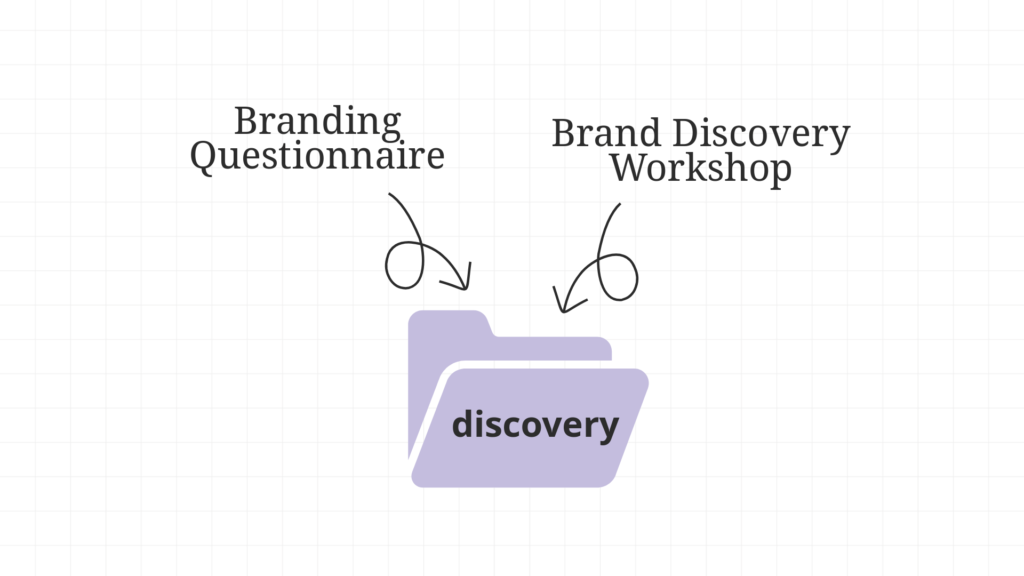
Plenty of designers actually run both. The questionnaire goes out first as pre-work, and the workshop becomes the space where you dig into whatever the answers left unclear. If you’re ready to run one, I’ve laid out the entire process in how to structure and price a brand strategy workshop, including what to cover in the session and what it’s reasonable to charge for it.
If a full workshop feels like more than a project needs, the questionnaire alone still gets you most of the way there. That’s the option most designers reach for first, and it’s the one my Branding Questionnaire Template is built to handle, prompts and all.
Why You Need Both
Skipping discovery to save time backfires. Clients struggle to articulate what they want on a strategy call because nobody asked them the groundwork questions first. You miss differentiators that would’ve been obvious with five more minutes of research. The strategy that follows ends up vague, and vague strategy produces vague design.
Skipping straight from discovery to design causes the opposite problem. You’ve got a stack of good information and no filter for turning it into a decision. That’s the gap a lot of designers fall into when they treat a questionnaire as if it were strategy on its own. A questionnaire is a discovery tool. It gives you raw material. Strategy is the separate act of interpreting that material, resolving the contradictions in it, and choosing a direction with reasoning attached.
How Brand Discovery and Brand Strategy Work Together
Think of the two as sequential layers rather than competing steps. Discovery comes first and feeds everything after it. Strategy takes that material and turns it into a framework. Creative direction and visual identity come last, and they’re supposed to reflect the strategy, not lead it.
When both layers are solid, the design phase gets a lot easier to defend. You’re no longer asking “does this look good.” You’re asking “does this match the strategy we agreed on,” which is a much easier conversation to have with a client who’s already seen the reasoning behind it.
How to Structure Your Own Process
If you want a simple way to put this brand discovery vs brand strategy distinction into practice, three stages will get you there.
Step 1: Run structured discovery. Send a detailed branding questionnaire, do your competitor research, and if the project calls for it, run a brand discovery workshop to dig deeper with the client live. My Branding Questionnaire Template covers brand foundations, audience, competitors, personality, and visual preferences in one document, so you’re not rebuilding this from scratch every time a new client signs on.
Step 2: Synthesize and define strategy. Go back through everything discovery turned up. Look for recurring themes, contradictions, and competitive gaps, then define positioning, audience, messaging pillars, and voice based on what you found.
Step 3: Document it clearly. Put the strategy into a format the client can actually reference later, one that keeps future design and marketing decisions aligned with what you both agreed on.
Handled this way, brand discovery vs brand strategy stops being a confusing overlap and starts being two distinct, sequential phases that each earn their place in your process.
Ready to tighten up the first step? The Branding Questionnaire Template is $17, available in Google Forms, Notion, and fillable PDF, and it’s built to get you real answers instead of “something modern but timeless” on your next project.
Next Steps: Start This Week
- Look at your last three projects and mark where discovery ended and strategy actually began. If you can’t tell, that’s your sign the two phases are blurring together.
- Swap your current questionnaire for one built to pull out specific, usable answers, or grab the Branding Questionnaire Template so you’re not rewriting questions from memory every time.
- Decide, project by project, whether a form is enough or whether a brand discovery workshop makes more sense given how many stakeholders are involved.
- Build a simple strategy template so the interpretation step has a home, instead of living in scattered notes.
FAQ: Brand Discovery vs Brand Strategy
What is the main difference between Brand Discovery vs Brand Strategy?
Brand discovery is the research phase, brand strategy is the decision-making phase. Discovery gathers information about the business, audience, and market. Strategy takes that information and turns it into positioning, messaging, and direction.
Is a brand discovery workshop the same as brand strategy?
No. A brand discovery workshop is still part of discovery, just run live instead of through a form. You’re gathering information and asking follow-up questions in real time, not making strategic decisions yet. Strategy still happens as a separate step afterward.
Do I need to run a brand discovery workshop for every project?
Not necessarily. A questionnaire alone covers most smaller projects well. A workshop tends to make more sense when there are multiple stakeholders, the brand is rebranding or pivoting, or the client’s written answers feel too thin to build a strategy from.
Is a branding questionnaire enough to skip straight to strategy?
A questionnaire is a discovery tool, not a strategy. It gives you raw answers. Strategy is the separate step of interpreting those answers, resolving contradictions, and choosing a direction with reasoning behind it.
What comes first, brand discovery or brand strategy?
Discovery always comes first. It provides the insight strategy needs in order to make informed decisions about positioning and messaging.
What happens after brand strategy is finished?
Creative direction and visual identity come next. Typography, color, imagery, and tone of voice should all trace back to decisions made during the strategy phase.