
TL;DR
A branding proposal usually doesn’t get rejected because of your design work, it gets rejected because the client can’t tell what they’re actually paying for. This post walks through what really makes clients hesitate (pricing clarity, not creative quality), what to include in a proposal that gets signed, whether you need a separate contract, and how to fix pricing anxiety before the proposal stage even starts.
You just sent a branding proposal to a client you were genuinely excited about. Now you’re refreshing your inbox every hour, replaying the call in your head, wondering if the number on page four was too high, too low, or presented in a way that made you look like you were guessing. If that sounds familiar, you’re not alone, and you’re also not wrong to worry about it. A branding proposal is one of the highest-stakes documents you send in your entire client process, because it’s the moment where interest either turns into a signed project or quietly disappears.
Here’s the part that surprises a lot of designers: when a branding proposal gets rejected, it’s rarely the mood board or the strategy section that killed it. It’s almost always something about the pricing that felt unclear, unjustified, or sprung on the client without context.
What Actually Makes Clients Hesitate on a Branding Proposal
When a prospective client goes quiet after receiving a branding proposal, the instinct is to assume they didn’t love the creative direction, or that a competitor came in with flashier work. In reality, most hesitation comes down to money, and more specifically, whether the client understands the logic behind the number they’re looking at.
Research on service pricing backs this up. A Medium piece on custom pricing and client trust makes the point that clients don’t usually push back because a price is too high, they push back because the reasoning behind it is invisible to them. When a client can’t see why your branding proposal landed on a specific number, they fill in the blanks themselves, and they rarely fill them in generously.
Think about what happens on your end when a client sends you a project brief with no budget range attached. You start guessing. You wonder if you’re about to lowball yourself or scare them off. Clients go through the exact same thing when they open a branding proposal and the investment section feels disconnected from everything that came before it. The fix isn’t a bigger portfolio or a more polished cover page. It’s making sure your branding proposal walks the client through your thinking so clearly that the price feels like the obvious next step, not a surprise.
Why Pricing Clarity Beats a Bigger Portfolio
You’ve probably had the experience of losing a project to a designer whose portfolio wasn’t nearly as strong as yours. It stings, and it also usually has nothing to do with talent. It has to do with which of you made the client feel most confident about what they were buying.
A well-structured branding proposal builds that confidence in layers. It opens with the client’s goals so they feel understood, walks through your process so they know what to expect, and only then gets to pricing, by which point the number has context instead of standing alone. Skip any of that setup and even a fair price can feel arbitrary. According to a breakdown from Outbooks on proposal pricing mistakes, unclear or overly complex pricing structures push prospects toward comparing you on price alone, which is exactly the dynamic you’re trying to avoid.
This is also why the timing of your branding proposal matters. If pricing is the first real information a client gets about your rates, you’re asking a lot of that one document. If they’ve already seen your services and pricing laid out clearly before the proposal stage, the proposal becomes confirmation of something they already trust, not the first time they’re doing math in their head.
What Belongs in a Branding Proposal Clients Actually Sign
A branding proposal that gets signed usually follows a structure that builds trust section by section instead of front-loading the sales pitch. Here’s what that looks like in practice:
An introduction that reflects the client back to themselves. Reference their goals, their industry, and what they told you in your discovery call or branding questionnaire. This is where the client decides whether you actually listened.
A brief strategy or approach section. You don’t need to give away your entire process, but a short explanation of how you’ll get them from where they are to where they want to be builds credibility before you ever mention a dollar amount.
A clear breakdown of deliverables. List exactly what’s included, logo files, brand guidelines, social templates, whatever applies. Vague deliverables are one of the fastest ways to create scope confusion later.
A timeline. Even a rough one. Clients want to know when they’ll see the first concepts and when the project wraps.
The investment section, presented with structure, not just a number. Break it into packages or phases if that fits your process. A single flat fee with no explanation is where most branding proposals lose people.
A clear next step. Tell them exactly what to do to move forward, whether that’s a deposit link, a contract to sign, or a reply confirming the scope.
If you’re still working out what to actually charge before any of this goes into a proposal, this guide on figuring out your rates walks through how to land on a number you can present with confidence instead of guessing under pressure.
Where the Design Contract Fits In
A branding proposal and a design contract aren’t the same document, even though a lot of designers use the terms loosely. The proposal is where you sell the project, walk the client through scope, and present pricing in a way that makes sense. The contract is where you protect both of you once they’ve said yes.
According to AIGA’s Standard Form of Agreement for Design Services, most design firms build a custom proposal for each project and then attach a set of standard terms and conditions to it, and together those two pieces form the actual binding agreement with the client. That’s a useful way to think about a design contract template if you’re building one for your own studio: it doesn’t need to replace your branding proposal, it needs to sit alongside it and cover the legal groundwork the proposal isn’t built for, things like payment terms, revision limits, ownership of final files, and what happens if a project stalls.
If you don’t have a design contract yet, AIGA’s agreement is a solid starting reference, though you’ll still want a legal professional to review anything before you send it to clients.
Fix the Pricing Anxiety Before You Ever Send a Branding Proposal
Here’s the thing about branding proposal anxiety: by the time you’re staring at the pricing section wondering if it’s too high, the real problem usually started earlier. If the only pricing information a client has ever seen from you is the number sitting inside the proposal, you’re asking one document to build trust and justify cost at the same time, in a single read.
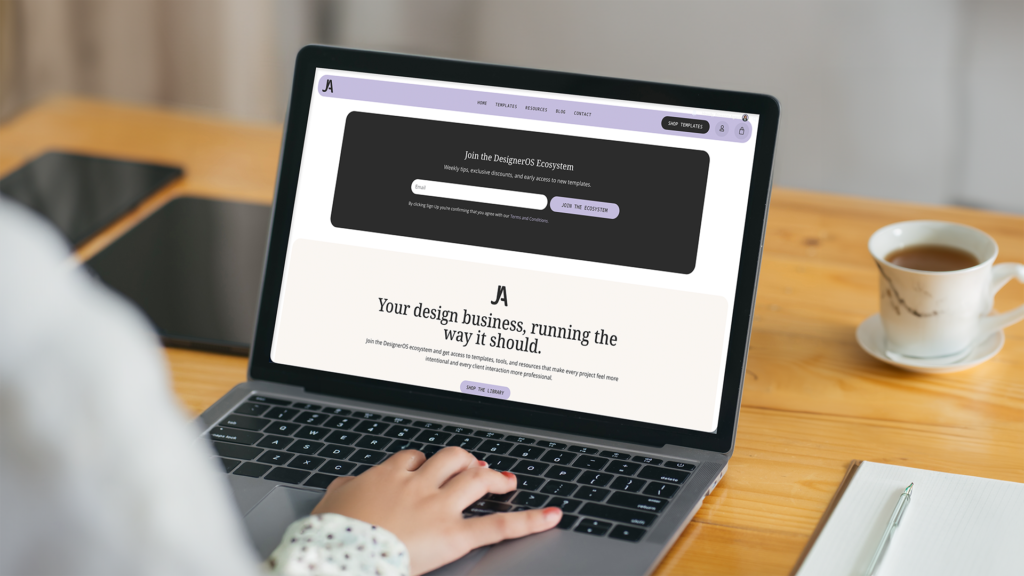
That’s exactly the gap my Services & Pricing Guide Template was built to close. It’s not a proposal template, it’s the piece that goes out earlier, right after someone inquires and before the consultation, so your client already understands your packages, your process, and your pricing philosophy before pricing ever becomes a conversation. By the time you do send a branding proposal, or even hop on a discovery call, the client isn’t seeing your rates for the first time. They’ve already had a chance to sit with them.
It comes as a 21-page editable document plus a companion workbook that walks you through setting your package prices with a step-by-step framework, including current industry benchmark ranges so you know your numbers are in the right territory. If you want a deeper look at what should go into a document like this, this breakdown of what a services and pricing guide should include covers it section by section.
Next Steps: Start This Week
1. Look at your last branding proposal that didn’t convert. Was pricing explained with context, or did it show up as a flat number with no build-up? That’s usually the tell.
2. Draft your six proposal sections. Introduction, approach, deliverables, timeline, investment, and next steps. Even rough bullet points under each heading will make your next proposal faster to write.
3. Check whether you have a contract to pair with it. If not, start with AIGA’s Standard Form of Agreement as a reference point and get it reviewed before you use it.
4. Move your pricing earlier in your client process. If your Services & Pricing Guide Template isn’t part of your workflow yet, this is the week to add it, so your branding proposal isn’t the first place a client sees your numbers.
Frequently Asked Questions
Why do clients reject a branding proposal even when they liked the initial call?
Most of the time it comes down to pricing clarity rather than the creative direction. If the investment section feels disconnected from the rest of the branding proposal, clients tend to hesitate even when they were genuinely excited about the work.
Should I send a branding proposal and a design contract together?
They serve different purposes. The branding proposal sells the project and lays out scope and pricing. The design contract protects both parties with terms around payment, revisions, and ownership. Many designers send the contract as a follow-up once the proposal is approved, though some attach both at once.
How long should a branding proposal be?
Long enough to build trust, short enough that the client doesn’t lose momentum. Focus on including an introduction, approach, deliverables, timeline, investment, and next steps rather than hitting a specific page count.
Do I need a lawyer to write a design contract?
It’s worth having any contract reviewed by a legal professional, even if you start from a reference like AIGA’s Standard Form of Agreement for Design Services. Contract law varies by location, so a quick review can save you real problems later.
What should come before I send a branding proposal?
Ideally, the client should already have a general sense of your pricing structure before the proposal lands in their inbox. That’s usually done through a services and pricing guide sent earlier in the inquiry process, so pricing isn’t a surprise by the time the proposal arrives.