TL;DR
An owned audience is a group of people you can reach directly through your website or email list, so you don’t depend on an algorithm to get seen. I still use Instagram, but I now treat my website as my home base and my email list as the way to reach people again. This post covers what I’ve seen in my own business, a few verified facts about why rented platforms are risky, and five steps you can start this week.
If you’ve ever posted something you were proud of on Instagram and watched it collect a handful of likes, you already know what it feels like to depend on a platform you don’t control. I’ve been there too. Instagram is where most of my early clients found me, and I still like it. I want to share why I decided to build an owned audience that doesn’t live on any single app, and how I’m doing it with a full-time job on the side.
By an owned audience, I mean people you can reach directly through your own website or email list, without needing a platform’s permission or an algorithm’s approval.
Why I Decided to Build an Owned Audience Beyond Instagram
When I first started trying to get clients, I was posting my work on Instagram. I didn’t have client work yet, so I made up brands, designed full identities for them and shared my whole process, moodboards and mockups included. It worked well, since most of my clients came from Instagram and a lot of them already knew my style before they reached out.
So why would I want an owned audience now? Because the audience I had on Instagram lives on someone else’s property, and the owner can change the rules whenever they want.
It has happened before. In January 2018, Mark Zuckerberg wrote that public content from businesses, brands and media was crowding out personal moments, and Facebook said it would prioritize posts from friends and family. Global News reported that businesses relying on free reach to followers were expected to be hurt. In January 2025, the Associated Press reported that TikTok went dark in the US hours before a federal law took effect, and the app was removed from Apple’s and Google’s app stores.
Those are different platforms with different problems, but the lesson carries over, because anything you rent can change its terms without asking you first. Tactics shift too. Instagram head Adam Mosseri said in an interview that hashtags don’t significantly increase your reach on Instagram, which is a tip a lot of us followed for years.
You don’t need to delete your account to build an owned audience. I still use Instagram polls to ask other designers what they want me to write about. The only thing that changed for me is that Instagram is no longer the one place people can find me, because a business that sits on a foundation you don’t own is a risky place to be.
Your Website Is Your Home Base (With One Honest Catch)
Here is how I rank my marketing channels. My website and blog come first, because search can send people to me every single day, even when I’m at my day job. Pinterest and email come next, and social media is a secondary channel for me.
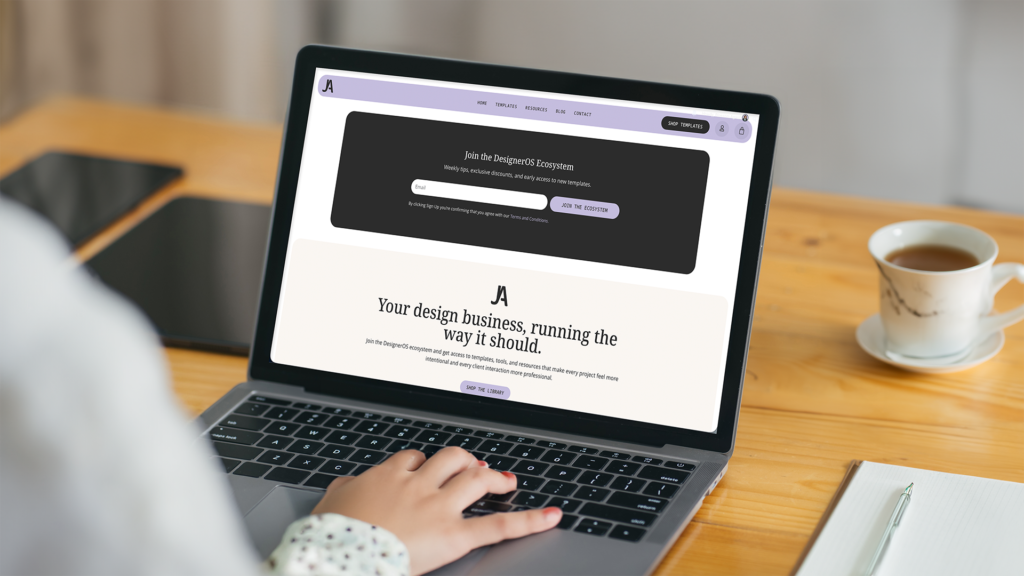
A website is the foundation of an owned audience, because it’s the one place where you decide what people see and what happens when they click. It also holds your portfolio and your contact form, so every other channel can point to one home. If you want help with what to say once people land there, my post on how to position yourself and land the clients you want covers it.
Search isn’t fully in your hands either, though. Pew Research Center tracked the browsing of 900 US adults in March 2025 and found that people clicked a traditional result link in 8% of visits when Google showed an AI summary, compared with 15% of visits when there was no summary. That study covered Google only, so I can’t say how other search engines compare. It does tell me that I shouldn’t count on one source of traffic for my owned audience, even a good one.
A website gets people to my door, and an owned audience needs something more, which is a way for me to reach them again after they leave.
Your Email List Is the Core of an Owned Audience
An email list is the closest thing to an owned audience that most of us can build. When MailerLite tightened the limits on its free plan, I had to audit my automations and decide which ones to keep. That was annoying, but my subscribers weren’t at risk, because a list can be exported and moved to another provider. You can’t pick up your Instagram followers and carry them to a new app.
Email also tends to pay off. Litmus reports that 35% of marketing leaders get between $10 and $36 back for every $1 spent on email. Keep in mind that this comes from a survey of marketers, so it shows what some companies report, and your results will depend on your list and what you send.
My own results are more mixed. My open rates have been strong, but my click-through rates have been lower. The email that has done the best for me is the one where I gave something away, my free Moodboard Presentation Template. That send also brought in my first orders that I can trace back to email.
That taught me to give something useful before I pitch anything. If you’re deciding what to offer your own owned audience, pick a resource that solves one small problem your ideal client has right now.
Want a simple lead magnet to start with? Download my free Moodboard Presentation Template and use it as the free resource for your own list.
Use Pinterest, Threads and Referrals as Doors to Your Website
Once you have a home and a list, the other channels have one clear job, which is feeding your owned audience.
I create pins for Pinterest and link them back to my portfolio, so a potential client who sees my work there lands on my website and can see everything and contact me. I’ll be honest that Pinterest has been a slow build for me and it hasn’t produced sales yet. I keep it going because the traffic ends up on my own site.
I also shared a post about switching to Affinity on Threads, and it took off, sending a lot of page views to my website. I love that kind of win, because the link leads somewhere I own. I haven’t been posting there consistently, so I see it as a happy accident I’d like to repeat.
Referrals cost me nothing. I created a referral program where past clients get either a discount on their next project or a small kickback if the person they refer books with me. I mention it at the end of my offboarding document, right after I ask for a review, and I got a lot of referrals that way. Each referral is a new person for my owned audience, and I wrote more about the system in how to turn past clients into referral machines.

How to Build an Owned Audience Without Instagram When You Have a Full-Time Job
I work a full-time job alongside my business, so I can’t post every day, and I wouldn’t want to. A slower approach to growing an owned audience works for me because most of the effort keeps paying off after I’ve done it. A blog post keeps working after I publish it, and a welcome email keeps greeting new subscribers while I’m at work. I’m also building a two-week content buffer, so a busy week at my day job doesn’t leave my blog empty.
My posts answer questions I know my audience is asking. I get those questions from my email replies and from those Instagram polls. When you write about a specific problem, the reader feels seen, and I’ve found that builds trust faster than anything else. I also wrote about what to automate first as a one-person design studio.
Next Steps: Start This Week
If you want to start your owned audience, here is what I’d do over the next seven days.
- Pick one free resource. Choose something that solves one small problem for your ideal client, like a checklist or a template.
- Add a signup form to your website. Put it on your homepage and at the end of your most visited blog post, and connect it to an email tool you can export from.
- Write a short welcome email. Say who you are, deliver the free resource and ask one question so people can reply.
- Publish one blog post. Answer a question your ideal client has asked you, and use the words they use.
- Point your other channels home. Update your Instagram bio, your Pinterest pins and your offboarding document so each one sends people into your owned audience through your website or signup page.
You can keep your Instagram account while you do all of this. The only change is that your business and your owned audience no longer live there alone.
Ready to Make Your Content More Specific?
The posts and emails that grow an owned audience start with knowing exactly who you’re speaking to. If you want a ready-made process for getting there, my Brand Strategy Toolkit gives you a client questionnaire, plus a strategy template and a companion guide, so you can show up with a clear message every time you publish.
Frequently Asked Questions
What is an owned audience?
An owned audience is a group of people you can contact directly through channels you control, such as your website and email list. You decide what they see, and no platform’s algorithm sits in between.
Can you build an owned audience without Instagram?
Yes. In my own business, most of my early clients came from Instagram, and I’m now building an owned audience through my website, my email list, Pinterest and referrals. I cannot confirm that this will produce the same results for you, because it depends on your niche, your content and your offer.
Which Adobe apps does ArtCraft copy?
The apps mirror Photoshop, Illustrator, Premiere, Lightroom, After Effects, InDesign and Acrobat Pro. The ArtCraft site also lists stand-ins for Word, Excel, PowerPoint and AutoCAD.
Is email marketing still worth it?
Litmus reports that 35% of marketing leaders get between $10 and $36 back for every $1 spent on email. That comes from a survey of marketers, so treat it as a benchmark of what some companies report. Your own return will depend on your list and what you send.
How long does it take to build an owned audience?
I cannot confirm a typical timeline. It depends on how much traffic you get, what you offer as a free resource and how consistently you publish.
Should you quit Instagram?
That is my opinion and not a fact, but I’d keep it as one door to your business while building your website and email list as the home people come back to.