
TL;DR
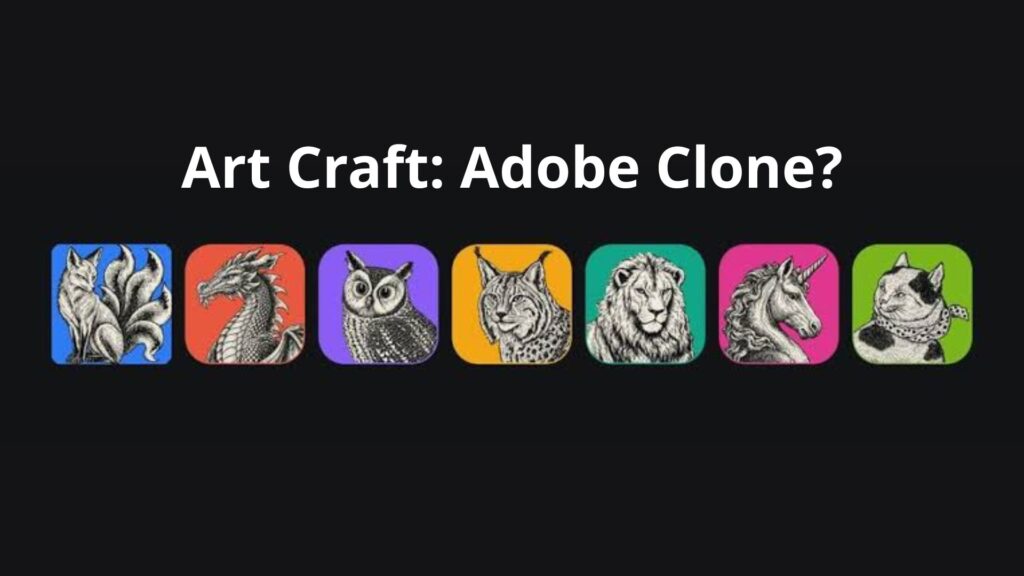
ArtCraft is a free, open-source set of AI-built Adobe lookalikes from developer Brandon Thomas, with seven apps that mirror Photoshop, Illustrator, Premiere, Lightroom, After Effects, InDesign and Acrobat Pro. Testers call it glitchy and early alpha, and Thomas himself says it is “not anywhere close to ready.” I cannot confirm any security problems, but I would keep client files away from it for now.
Hey guys! I was scrolling Threads the other night when a post made me stop and read it twice. Someone had supposedly used AI to rebuild Adobe’s entire Creative Cloud and then given it away for free. My first reaction was that it had to be exaggerated, so I went digging. The project is called ArtCraft, and the story turns out to be real, though the details are a lot messier than the headlines suggest. Since this affects the software so many of us use every day, I want to walk you through what ArtCraft is, what reviewers found when they tested it, and why I personally would not trust it with client files yet.
What Is ArtCraft and Who Built It?
ArtCraft is an open-source project led by a developer named Brandon Thomas. Gizmodo describes him as Atlanta-based, and Creative Bloq quotes his Reddit post where he calls himself a 15-year industry veteran who has used the Rust programming language for about a decade. He announced the project on Reddit and Hacker News in early October 2026, and the coverage I read was published between October 7 and October 11.
According to the reports, Thomas used Anthropic’s Claude Opus 5.5 to write the apps in Rust. He describes the approach as a clean-room reimplementation, which means the code is written from scratch instead of copied from Adobe. Vicedescribes the same work as reverse engineering, and I cannot confirm which description is accurate. On the ArtCraft website, the project says no subscription is required and that the whole studio is on GitHub. TechSpot reports that funding is expected to come from a separate business that sells AI model tokens, and BigGo Finance mentions a paid tier for cloud AI generation credits. That means “free” seems to describe the ArtCraft apps themselves and not necessarily every feature around them, and I cannot confirm the full pricing details.
The ArtCraft Apps and the Adobe Software They Copy
The headline said Creative Cloud, and the project really does go wide. Based on the ArtCraft GitHub page, here are the apps that mirror Adobe’s lineup, with the Adobe app each one stands in for as reported by TechSpot and BigGo Finance:
| ArtCraft app | Adobe app it mirrors |
|---|---|
| PhotoCraft | Photoshop |
| VectorCraft | Illustrator |
| FilmCraft | Premiere |
| LightCraft | Lightroom |
| EffectCraft | After Effects |
| DesignCraft | InDesign |
| PdfCraft | Acrobat Pro |
A couple of outlets spell the PDF app’s name differently, so I am using the names listed on GitHub. The ArtCraft site lists 13 apps in total, and the extras include stand-ins for Word, Excel, PowerPoint and AutoCAD. If you spend most of your day in Photoshop and Illustrator like I used to, the first two rows are the ones that matter most to you.

How True Is the “Adobe Clone” Claim?
The part of the Threads post I was unsure about was whether someone really copied Adobe’s whole ecosystem. The honest answer is that it is partly true and partly oversold. Seven real apps exist, they are public on GitHub, and several outlets tested or reported on them. The repositories I could see list the Apache-2.0 license, which is a permissive open-source license that lets people use and modify the code, although I could not see license details for every repository.
Vice describes the whole thing as vibe coding, which is the habit of telling an AI what you want and letting it write the code. What the claim leaves out is how finished any of this is. A copy of Adobe’s look and feature names is a very different thing from a copy of Adobe’s decades of polish. Thomas himself said “Software is over” on Hacker News, a line both Creative Bloq and TechSpot quote, but his own project tells a more modest story once you look at how the apps perform.
Why Did Someone Build a Free Adobe Alternative?
Thomas says the trigger was a cancellation fee. In his Reddit post, quoted by Creative Bloq, he said he “got bit by the dark pattern ‘cancellation fee’ one too many times.” That frustration has some history behind it. In March 2026, Adobe agreed to a $150 million settlement of a US government lawsuit over its subscription practices. The government alleged that the early termination fee was buried in fine print and that cancelling was made deliberately complicated. Adobe says it disagrees with the government’s claims and denies any wrongdoing.
I know that feeling personally, because I left Adobe myself and moved over to Affinity. If you want to see how I cut my own software costs, I wrote about how to run a design studio without a million subscriptions. Thomas took a much bigger swing than switching apps, and it got a lot of people talking about what a free Adobe alternative could look like.

Software changes, and your process is what clients actually pay for. If your discovery work still lives in scattered notes, my Brand Strategy Toolkit gives you a client questionnaire and a strategy template, plus a companion guide, so you can run that part of every project the same way.
How Well Do the Apps Actually Work?
Not well enough yet, going by the people who tested them. Gizmodo’s Mike Pearl tried only PhotoCraft and said it feels like “glitchy, but real” Photoshop. He reported that the Free Transform tool behaved unpredictably, although he finished a photo-compositing task in about a minute. Vice calls the software “incredibly glitchy” and says it is in early alpha. Thomas seems to agree, since Gizmodo quotes his Hacker News post saying the software is “not anywhere close to ready.”
The timeline has shifted too. Thomas first said the project would reach 100% parity with Adobe within a month, and TechSpot reports that he later said it would take months. BigGo Finance reports figures from the project’s own self-assessment, which put the suite at about 45% truly production-ready. In the same report, only 133 of 256 PhotoCraft test files matched Photoshop at the pixel level, and only 5 of 30 filter test cases matched. I could not check those figures against the primary source myself, so please treat them as reported and not confirmed.

Is ArtCraft Safe to Use for Client Work?
This section is my opinion, so I want to be clear about what is known and what is not. None of the coverage I read reports a security problem with ArtCraft, and I cannot confirm that any of the apps contain malware or vulnerabilities. The reports I read also do not mention a security audit. Gizmodo’s author advises caution before downloading vibe-coded software, and I agree with that advice.
My biggest hesitation is how fast the code is moving. BigGo Finance reports that the PhotoCraft repository had 1,152 commits and 1,004 merged pull requests in about 10 days, with between 10 and 20 AI agents working in parallel. I find it hard to picture anyone reviewing that pace line by line, although that part is my own interpretation and not something the reports say.
Then there is your clients’ work. A glitchy tool is a bigger gamble when the file belongs to someone else, and I cannot confirm whether anyone has reported lost or corrupted files. The legal questions are also still open. Vice calls the project “legally dubious” and speculates that Adobe may go after users, although it reports no lawsuit. BigGo Finance, citing PetaPixel, notes that a clean-room approach addresses copyright while Adobe holds thousands of patents, and it says whether ArtCraft infringes “remains an open question.” Adobe had not commented at the time.
Longevity matters too. TechSpot reports that Thomas says the project has team support and will not be abandoned. That is a promise I would want to see kept for a while before a client deadline depends on it.
What the Story Says About Adobe and Your Software Costs
Whether or not ArtCraft ever matures, it shows how much frustration Adobe’s pricing and cancellation practices have built up. A solo developer was annoyed enough to try rebuilding seven apps with AI, and I think plenty of you are tired of renting your tools by the month too. That is my read of the situation and not something the coverage states.
For now, I would treat ArtCraft as something to watch and not something to build your business on. If you are curious, trying it on throwaway files on a device that holds no client work seems like the most careful way to see it for yourself. Whichever apps you end up using, the strategy behind a brand stays yours, and my Brand Strategy Toolkit is there if you want that part of your process to be consistent.
Have you tried any of the ArtCraft apps yet? I would love to hear how it went, so send me a DM and tell me ofc.
Frequently Asked Questions
What is ArtCraft?
ArtCraft is an open-source project from developer Brandon Thomas that includes seven apps modeled on Adobe software, such as PhotoCraft for Photoshop and VectorCraft for Illustrator. Reports say it was built with Claude Opus 5.5 and Rust, and the apps are described as early alpha.
Is ArtCraft really free?
The ArtCraft website says no subscription is required, and the apps are on GitHub. BigGo Finance reports a paid tier for cloud AI generation credits. I cannot confirm the full pricing details.
Which Adobe apps does ArtCraft copy?
The apps mirror Photoshop, Illustrator, Premiere, Lightroom, After Effects, InDesign and Acrobat Pro. The ArtCraft site also lists stand-ins for Word, Excel, PowerPoint and AutoCAD.
Is ArtCraft safe to download?
I cannot confirm any security problems, and none of the coverage I read reports one. No security audit is mentioned either, and Thomas says the software is “not anywhere close to ready,” so I would keep it away from client files for now.
Can ArtCraft replace Photoshop right now?
No, according to the reports. Gizmodo’s tester called PhotoCraft “glitchy, but real,” and BigGo Finance reports that the project’s own self-assessment puts the suite at about 45% truly production-ready.
Will Adobe take legal action against ArtCraft?
I cannot confirm this. Vice speculates that Adobe may take action, but no lawsuit was reported in the coverage I read, and BigGo Finance says Adobe had not commented.